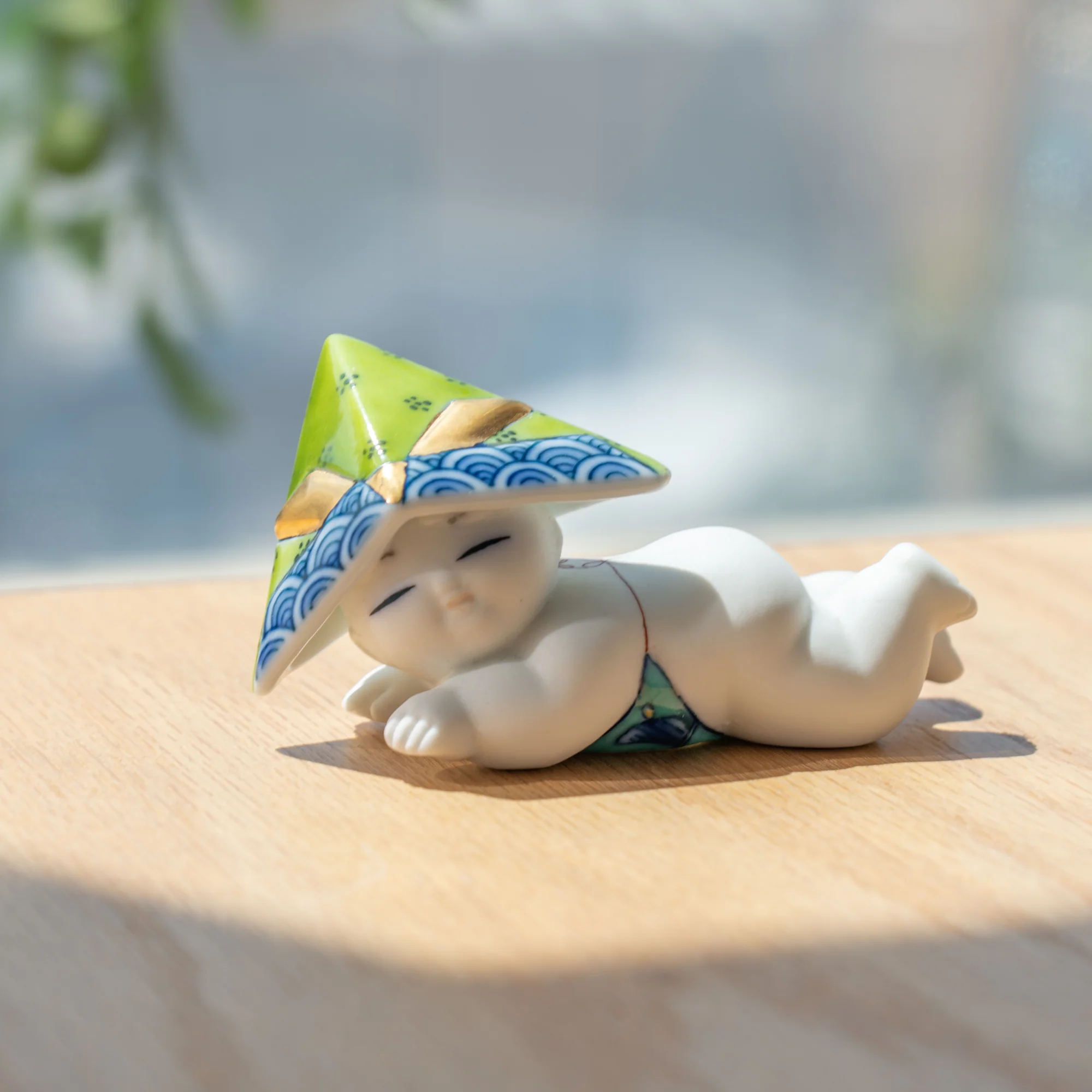
Boys' Festival Small Resting Gosho Doll
This adorable doll is made in the image of a gosho doll which was a type of doll favored by the court nobles of ancient Kyoto. These dolls are characterized by their large, rounded heads, and chubby little bodies which reflect the aesthetic valued during the Edo period (1603–1868 CE).
The doll is leisurely lying down on his belly with one knee bended. His translucent white skin is beautifully created with unglazed porcelain lending an air of realism. Enjoy the intricate details of this doll from the top of his helmet to the tip of his adorable toes.
The light green warrior helmet worn by the doll is decorated with plum blossoms and seigaiha "waves" patterns, symbolizing good fortune. The serene and innocent expression and other decorations are all hand-painted by skilled craftsmen at Hataman Touen's studio.
Originally, on Tango-no-Sekku (also known as Boys' Day), one of the five seasonal festivals from ancient China, it was customary to display seasonal decorations and offerings to drive away evil spirits and wish for good health. And following this custom, now dolls with warrior helmets or just the helmets are displayed in homes to wish for the healthy growth of children.
Original: $1,186.00
-70%$1,186.00
$355.80Product Information
Product Information
Shipping & Returns
Shipping & Returns
Description
This adorable doll is made in the image of a gosho doll which was a type of doll favored by the court nobles of ancient Kyoto. These dolls are characterized by their large, rounded heads, and chubby little bodies which reflect the aesthetic valued during the Edo period (1603–1868 CE).
The doll is leisurely lying down on his belly with one knee bended. His translucent white skin is beautifully created with unglazed porcelain lending an air of realism. Enjoy the intricate details of this doll from the top of his helmet to the tip of his adorable toes.
The light green warrior helmet worn by the doll is decorated with plum blossoms and seigaiha "waves" patterns, symbolizing good fortune. The serene and innocent expression and other decorations are all hand-painted by skilled craftsmen at Hataman Touen's studio.
Originally, on Tango-no-Sekku (also known as Boys' Day), one of the five seasonal festivals from ancient China, it was customary to display seasonal decorations and offerings to drive away evil spirits and wish for good health. And following this custom, now dolls with warrior helmets or just the helmets are displayed in homes to wish for the healthy growth of children.