Akechi Mitsuhide Kabuto Samurai Helmet Ornament
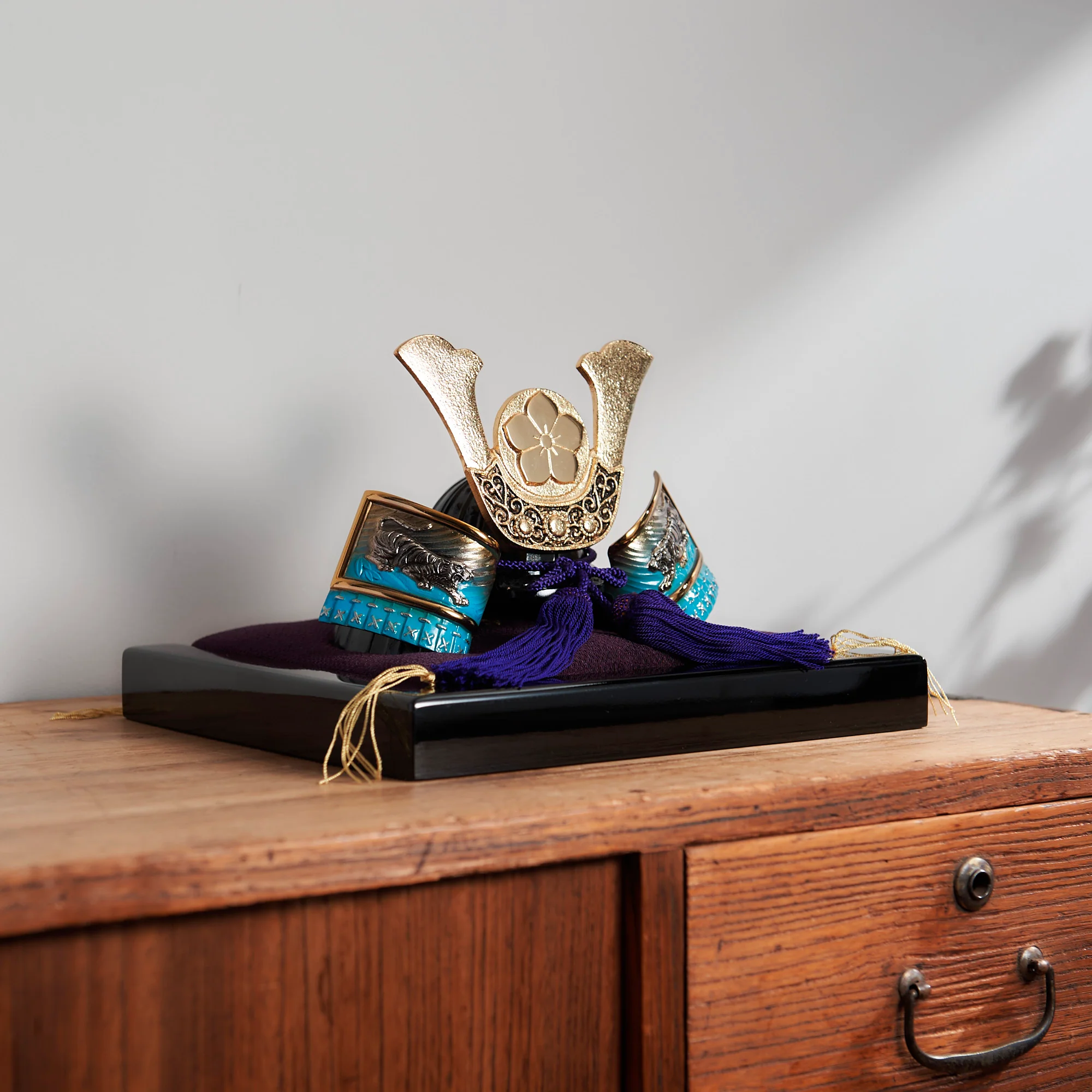
This kabuto samurai helmet ornament draws inspiration from the kabuto of Akechi Mitsuhide, a celebrated military commander and feudal lord during the Sengoku (1467–1590 CE) and Azuchi–Momoyama (1576–1603 CE) periods. The metal surface, with its three-dimensional curves and substantial presence, is adorned with finely engraved patterns, including a tiger rendered in vivid detail. The harmonious blend of gold, black, and blue accentuates the ornament’s majestic and luxurious appeal.
Historically, samurai helmets—kabuto in Japanese—provided essential protection in battle and have come to embody the safeguarding of life. This revered symbolism extends to Japan's Tango-no-Sekku, or Boys’ Day, celebrated each May 5. On this day, families proudly display kabuto ornaments in their homes to wish for their children’s well-being, robust health, and flourishing growth.
The striking front embellishment, referred to as the maedate, was meticulously crafted to underscore individuality and assert presence on the battlefield, featuring dynamic depictions of formidable creatures. The maedate bears the Akechi family crest, the kikyo-mon, and has been meticulously polished to a mirror-like finish by master craftsmen. The flared sides are rendered in a soft sky-blue hue reminiscent of the traditional kikyo-mon emblem.
The elegantly understated display stand offers a refined backdrop, while its deep jet-black finish artfully highlights the kabuto. Its thoughtfully designed size also makes it ideal for display on decorative shelves or in entryways with limited space.
Original: $4,619.00
-70%$4,619.00
$1,385.70Product Information
Product Information
Shipping & Returns
Shipping & Returns
Description
This kabuto samurai helmet ornament draws inspiration from the kabuto of Akechi Mitsuhide, a celebrated military commander and feudal lord during the Sengoku (1467–1590 CE) and Azuchi–Momoyama (1576–1603 CE) periods. The metal surface, with its three-dimensional curves and substantial presence, is adorned with finely engraved patterns, including a tiger rendered in vivid detail. The harmonious blend of gold, black, and blue accentuates the ornament’s majestic and luxurious appeal.
Historically, samurai helmets—kabuto in Japanese—provided essential protection in battle and have come to embody the safeguarding of life. This revered symbolism extends to Japan's Tango-no-Sekku, or Boys’ Day, celebrated each May 5. On this day, families proudly display kabuto ornaments in their homes to wish for their children’s well-being, robust health, and flourishing growth.
The striking front embellishment, referred to as the maedate, was meticulously crafted to underscore individuality and assert presence on the battlefield, featuring dynamic depictions of formidable creatures. The maedate bears the Akechi family crest, the kikyo-mon, and has been meticulously polished to a mirror-like finish by master craftsmen. The flared sides are rendered in a soft sky-blue hue reminiscent of the traditional kikyo-mon emblem.
The elegantly understated display stand offers a refined backdrop, while its deep jet-black finish artfully highlights the kabuto. Its thoughtfully designed size also makes it ideal for display on decorative shelves or in entryways with limited space.